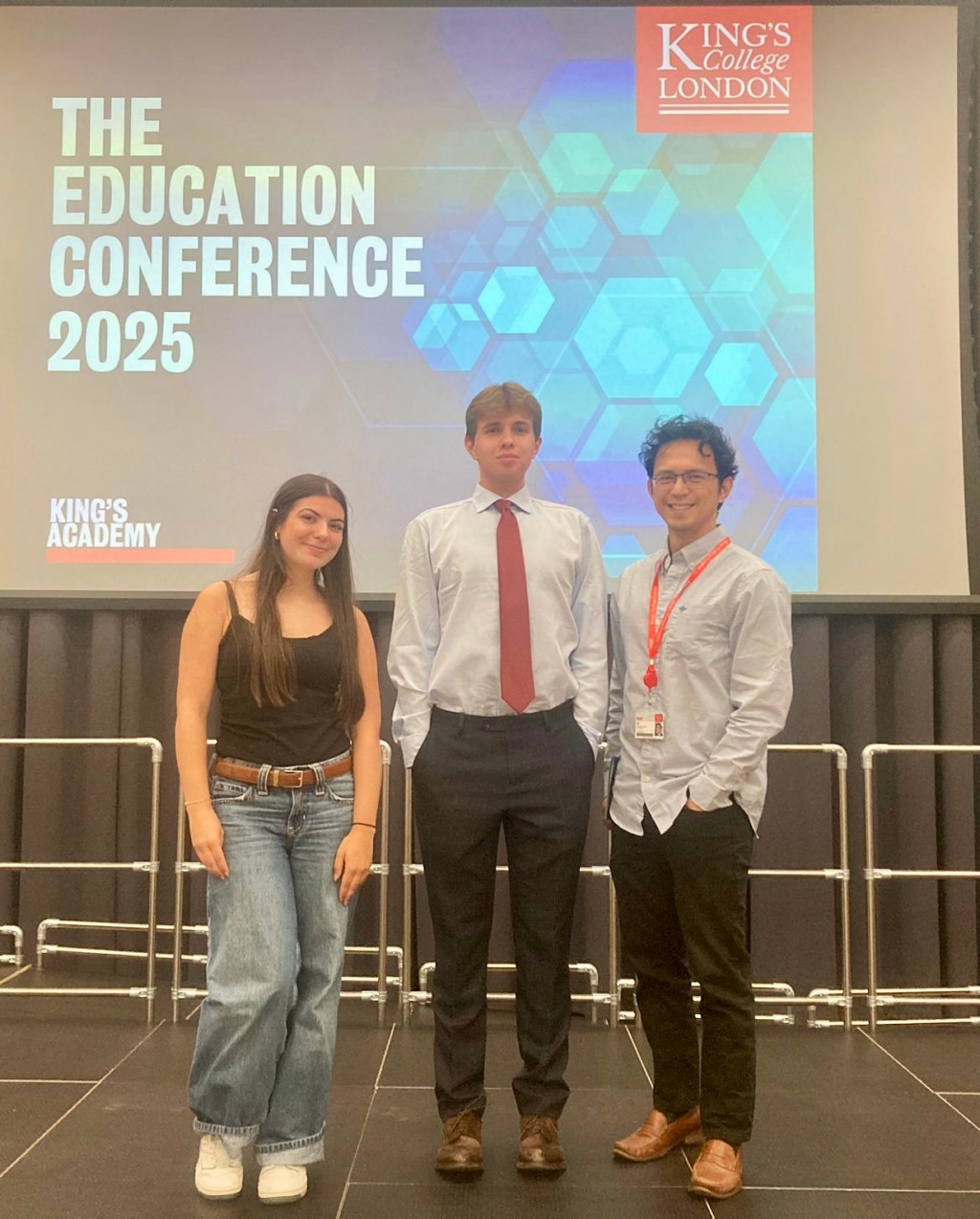
KCL undergrads James Duffy Thompson and Mollie Lane-Winter help lead an interactive workshop at the King’s Education Conference on Monday 23 June, along with Dr Edward David. Their session, “Starting with Stories: Participatory Methods for Student Voice and Co-Design,” introduced creative approaches to student partnership using story completion and reflexive thematic analysis. Attendees engaged in a hands-on activity using anonymised student narratives and explored how co-analytic methods can shape curriculum, induction, and pastoral care. Drawing on their work as student researchers in the Gen Z Role Models project, James and Mollie shared powerful reflections on the value of narrative in shaping inclusive and responsive education.
Abstract
This interactive workshop introduces two powerful participatory methods—story completion and reflexive thematic analysis (RTA)—as tools for embedding student voice and co-creation throughout the undergraduate educational journey.
Drawing on Dr David’s Gen Z Role Models research project in the Department of Theology and Religious Studies, we will demonstrate how creative narrative prompts and collaborative analysis can reveal students’ latent beliefs, values, and aspirations in ways that traditional surveys cannot. Workshop participants will take part in a hands-on RTA activity using anonymised story completions from two stages of the student lifecycle: pre-arrival expectations and mid-degree career reflections. We will explore how such data, when analysed with students, can inform and improve educational offerings, wellbeing support, and careers guidance. Co-presenters, James and Mollie (TRS undergraduates), will share their experiences working with these research methods.
We will conclude by discussing how academic and professional services staff might adapt these methods for induction, curriculum design, or personal tutoring. Participants will leave with practical ideas for implementing creative co-analytic methods and a renewed sense of how student partnership can be transformative when rooted in narrative and reflection.
 The Gen Z Role Models Project
Leave a comment